Showing posts with label Alexandria. Show all posts

Sunday, February 21, 2010

Bussing it from Cairo to Siwa

The next northbound train with available seats didn't leave until 8:00 p.m. This meant that I would miss the last bus to Siwa and would have to spend the night in Alexandria. I hadn't arranged a place to stay, so I'd wind up knocking on pension doors that had already been bolted shut for the night. I also knew that I'd feel guilty enough about waking someone that I'd probably take the first place with a bed, no matter how nasty. I knew of one place I could stay, but I wasn't sure I was ready to go back to Hossein after our history together. My plan was already coming apart.

Since I had five hours before my train and nothing to lose, I decided to put the motto that "Cairo always offers alternatives" to the test.* I would find a bus instead. I searched for, found, and waited in line at what I believe might have been the West Delta Bus Lines ticket office, but it could have just as easily been anything else. Whatever it was, the line hadn't budged after forty minutes of waiting, so I moved on. I walked a mile or so to a bus depot near the Nile hoping that I could maybe bribe a driver to let me slip on one of the group-package charter buses, but again, nothing. Things looked grim. I started my walk back when a random old man pointed at a dilapidated bus and said "al Iksanderia." I couldn't believe my luck. I tipped the guy (who may not have even been talking to me) the equivalent of the full fare and boarded. This was definitely no first-class train compartment: it was cramped, smelly and blared unnecessarily loud Egyptian music, but I was on my way! Even if I didn't make the connection to Siwa, I could at least find a bed in Alexandria before everything locked up and then try to catch the first bus the next morning.

I was feeling very good. My travel plans had almost collapsed even before I escaped Cairo, yet here I was speeding down the desert road past silhouettes of palm trees under purple skies and a crescent moon. I was going to make my connection! Not even the mildly anti-American variety show televised on the bus could bring me down (sample lyrics: Amreekee, Amreeka! Amreekookoo, koo koo!).

The bus terminated at El-Mogaf Gedida (the "New Terminal"), which despite its optimistic name, is nothing more than an unpaved parking lot on the outskirts of the Moharrem Bey district of Alexandria. With a half-hour to spare, I took my seat on the overnight bus to Siwa.** I'd normally be concerned about the noxious fumes that had begun to fill the idling bus, but they were keeping the mosquitoes away, and the enemy of my enemy is my friend and all of that, so I let myself drift off into a carbon-monoxide induced sleep

I woke up to find that the kid who had been sitting next to me at the start of the trip was now sleeping on top of me. We started a routine where I would wake him and get him back to his seat, and he would then instantly fall asleep and slump back into mine. This repeated on a fifteen second cycle for about an hour. His mother tried to intervene once on my behalf, but got such a scolding from her ten-year old son that she was effectively out of the fight. This exhausted what little sympathy I had for the disrespectful brat and I was about to elbow him onto the floor when we arrived at the half-way point of Marsah Martouh and they left. I'm very glad that I didn't try to overnight it here. It's lonely and it's cold and the only place to get food is a 24-hour LibyaOil. U.S. regulations used to prohibit me from shopping with the Libyans, but I think we're friends with Qaddafi again, so that may no longer be the case.

With the seat to myself, I fell back asleep quickly. When I woke up two hours later, I was freezing! I'd forgotten how cold nights in the desert can get, and this was truly desert. It was as flat as an asphalt parking lot and had even less vegetation. It stretched as far as the eye could see. It was relentless. I went back to sleep.

We arrived in Siwa an hour before sunrise. It was the first time I'd stepped off a bus in North Africa without instantly being swarmed by taxi drivers offering rides. The place was empty. The famous ruins of Shali, still illuminated by floodlights, loomed over the town. The only noise came from a few ambitious donkeys and roosters getting an early start on what, before the morning was over, would turn into a ridiculous cacophony of braying and crowing. For now, at least, everything was relatively quiet. I found my way through the maze of melted mud walls and towers of Shali to the top of the acropolis, where I watched the sun rise over the dunes of the Great Sand Sea and the palm fields of the oasis. I reminded myself that almost exactly one year ago, I was working in London as a corporate lawyer - a job I despised. I would say that the quality of my life has improved greatly since then.

* A more accurate motto would be "Nothing in Cairo works twice."
**
For anyone trying this on their own, the Lonely Planet guidebook is out of date: the Alex to Siwa bus service is operated by West and Middle Delta Bus Company, with the last bus leaving from the New Terminal in Moharrem Bey (not from Sidi Gaber) at 10:00 p.m. Tickets cost LE 35 and the trip takes approximately nine hours.

Thursday, February 11, 2010

Alexandria to Cairo

The Alexandria National Museum

This museum was outside the detailed map provided in my Rough Guide, which described it as being in an "Italianate mansion." Unfortunately for me, the neighborhood had plenty of these, so I accidentally visited an IT company and a private residence before I came to the right place. Next time I'll actually pay attention to the street numbers that the book had helpfully provided.

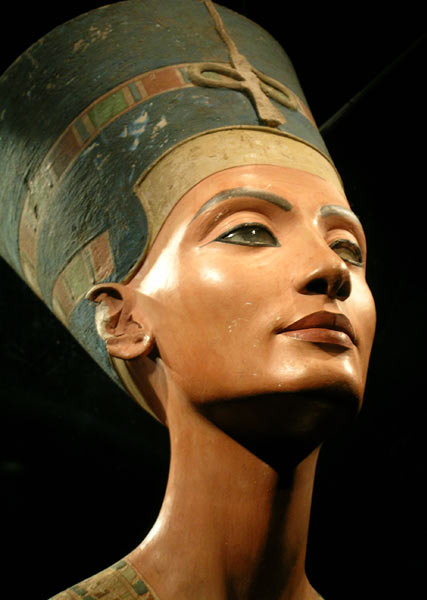
The National Museum, particularly the ancient Egyptian, Greek and Rroman exhibitions, was a real pleasure to visit. I'm a big fan of New Kingdom art, which ranges from stark realism (most people will be familiar with the bust of Nefertiti) to caricature that appears almost modern. This head of Akhenaten, the pharaoh to whom Nefertiti was married, is a good example of the latter. I'm now that much more excited to go to the Egyptian National Museum.

The rest of the collection is Coptic and Islamic artifacts. The top floor contains a room of "treasures" which King Farouk was forced to abandon following Nasser's 1952 coup. Unless you're interested in 20th century French porcelain or English china, I'd give this room a miss.

Alexandria Library

The Bibliotheca Alexandria was conceived as a "rebirth" of the Ancient Library of Alexandria, which housed original manuscripts of Sophocles, Aeschylus and Euripides. The Austrian-Norwegian team who won the commission reflected this rebirth by designing a library in the shape of a giant discus, representing a new sun rising over the city. If there's anything I remember from my years as an architecture school flunky, it's that taking too literal an approach to a concept is a bad idea. If you're building a train station, you should resist any urge to design a building in the shape of a train. The Bibliotheca Alexandria isn't shaped like a book, but the whole "rising sun" motif is a little heavy-handed for my taste.

The library also has letters, pictographs and hieroglyphs from every alphabet carved on the stone facing of the south wall, representing the breadth of knowledge the library contains. Again, a little gimmicky, but I still found myself obsessively counting how many of the symbols I could recognize as I loitered near the reflecting pool beneath the wall. The public spaces around the library are very active and the project appears to whole thing looks like it's been very successful at serving Alexandrians. I wish I had planned ahead and attended some of the events that are scheduled every day. On a weekend trip to Ljubljana last year, Ms. Chadha arranged tickets to a modern dance performance. I've tried ever since to incorporate that kind of thing into my traveling. I'm just not as good a planner as Ms. C.

I walked back along the corniche to my hotel room, bought a bottle of wine, and read on the balcony for the rest of the night. I'm already scheming how I'll get back to Alexandria soon.

Back to Cairo

My train wasn't leaving for an hour, so I went for a walk in the neighborhood just to the south of Alexandria's Masr Station. The streets were really bustling for 9:00 on a Sunday morning, which I suppose is more equivalent to Monday morning, so perhaps really not that interesting of an observation. At a juice stand, I watched the owner feed eighteen-inch lengths of sugarcane into a wheel press, collecting the resulting milky-green liquid in a tin bucket.

I had no idea what this stuff was called, but I was able to realize a long held fantasy by going up to the bar and asking for one "sugar juice," which I hoped would get the meaning across.* It did, and he served up two mug-fulls; one for me, and another so that he could demonstrate the safety and quality of his juice by drinking some himself. He took a quick pull on it, spitting a fair bit back into his mug, and then emptied the mug's contents back into the common pot. He had just given birth to exactly the concerns he hoped to dispel. I wasn't worried though, because what kind of bacteria could possibly survive in a warm brew of pure sugar water?

I took a deep pull of the juice. I had expected something really powerful, because I'd seen a travel program once where the host was absolutely destroyed by the sweetness of a similar drink. Maybe it's testament to my self-induced hyperglycemia that I wasn't fazed in the least - just one more thing to thank the folks at Coca Cola for. Fresh juice stands are one of my favorite things in the world, my only complaint is that because the juice is served in actual glasses or mugs, you're tethered to the stand and have to drink up on the spot. Sure, there's conversation sometimes, but more often than not, people just want to do their job without being bothered. I did ask the juice-guy whether next time I could have mine "bisukr," or "with sugar," which is how I normally order my tea. He acted like it was the funniest thing he'd ever heard, though he must have heard variations of the same joke every day for the last twenty years.

*I've since learned that this sugarcane juice is called "3aseer asab," which might mean "cane juice."

Tuesday, February 09, 2010

Alexandrian Archaelogical Tour

The next morning, I slipped out before anyone else had woken up. I had planned a full day of museums and sightseeing, and I wasn't sure the Austrians would be up for that. I also knew that if I ran into them at breakfast, I wouldn't feel comfortable telling them that I wanted to spend the day alone, so I had to slink out in the early hours like a bad daddy.

Kom el-Dikka


Finding the mausoleum of Alexander the Great seems to be the only game in town for Alexandrian archaeologists. Every major site describes how it it had been discovered and excavated by teams of disappointed archaeologists who had actually been searching for the legendary tomb. This was the case at Kom el-Dikka (which literally means "mound of rubble") and though they failed to find Alexander, the site is still being excavated under the supervision of the Polish Center for Mediterranean Archaeology(?!). The tour buses hadn't arrived yet, so I shared the mound with a couple dozen laborers who, in a scene recreated a thousand times in films from Raiders of the Lost Ark to The Mummy, were carrying away piles of rubble in wicker baskets.

The Roman Theater is worth seeing as are the mosaics at the Villa of the Birds - just be sure to ask for a joint ticket at the door. Otherwise, you face a long walk back from the villa to the ticket office and the temptation will be too great to just peek at the mosaics though the window. They warrant a better look. There is also a fine selection of artifacts that have been recovered from the harbor over the last decade, which only whets my appetite to someday dive in Alexandria.

Catacombs of Kom es-Shoqafa
Contrary to common sense, everything I had read, and my own gut instinct, I had decided to follow the advice offered by an ex-pat regarding the best way to handle taxis. He suggested that negotiating taxi fare in advance was a mistake that would instantly peg me as a tourist. The thing to do was sit down, enjoy the ride, hand over the going fare at the end of the trip, and calmly walk away. I knew that the trip to the catacombs shouldn't cost more the LE 6-7, but I was more than happy to pay ten. We arrive at our stop and I suggest seven. The driver gave me a look that wasn't so much anger as fatherly concern that I hadn't learned better manners. I sheepishly passed him ten without another word, but then he told me that I owed him twenty. I wasn't having that at all, so the arguing began until I fell back on the reliable "I've lived in Cairo for a year now, I know what taxis cost" and I got away with only a light fleecing. "Fleecing" is all relative, of course, as ten pounds is only a couple of dollars, but to put it in context, I took the municipal tram back into to the center of town from the nearby Pompey's Pillar for slightly under five cents. I will have to discuss somewhere else my rationale for believing that it's important not to overpay too much for cabs. As for the ex-pat, I guess I didn't technically follow his advice exactly, so I can't quite claim that he is a complete and total fraud.

The Catacombs of Kom es-Shoqafa (which means "mound of shards" - it may be time for the Egypian Tourist Board to call in some consultants) is an amazing tomb complex that wasn't discovered until 1900, when a "donkey chariot" (sic) fell into one of the upper levels. You descend via a spiral staircase which, like the rest of the extensive rooms and halls of the catacomb, is carved directly out of the bedrock. Only two levels are accessible, as the bottom level remains under water, but the second level gives a good sense of the place. It's claustrophobic, damp, and a little creepy; all the things a catacomb should be. The decorations, if ever there were any, are mostly gone, except for a few murals visible only under UV light. The main carvings in the central tomb are a strange mixture of Roman, Greek and Egyptian themes - the most interesting being a pair of bas reliefs depicting Sobek and Anubis in Roman armor. It was too dark to get pictures on the cell phone camera, unfortunately, but the internet has gathered plenty if you're interested. Most definitely worth seeing.

On the way out, one of the security guards told be he would let me see the catacomb that was marked by a large "off limits - keep out" sign if I gave him LE 10 baksheesh. I was ready to say no, until I saw a pair of Australian tourists coming out of it giving a thumbs up. I took the money and set off down the passage. It's pretty clear that the reason the place was off limits was because it wasn't much more than a dark, dangerous, empty hole. Australians will give a thumbs up to anything.

Pompey's Pillar

A five minute walk from the catacombs is Pompey's Pillar, so named because medieval travelers were under the impression that the severed head of the Roman general Pompey, who was murdered in Alexandria some time after his defeat by Julius Ceasar in the battle of Pharsalus, was in a jar on top of the column. It is now believed that the column was actually raised by Diocletian more than 200 years later, but the thing is nearly 27 meters high, which maybe explains why it took so long before somebody bothered to disprove this whole head-in-a-jar theory. In any event, the name stuck.

The attendant at the site's ticket booth asked me in perfect English whether I wanted a ticket, to which I sensibly replied "na'am! wahid! min fadlak!" (rough translation: yes! a father! please!). Once again I was complimented on my excellent Arabic, but this time my cryptic reply had evidently impressed them (ticket attendants are never without an entourage) so much that they had to know more, so the group begin to pepper me in Arabic with questions. Where was I from? How long had I studied? Did I like Egypt? Luckily, they were all asking questions at the same time, which allowed me to answer any question I chose, even ones they hadn't asked:

"I live in the borough of Brooklyn in the city of New York."
"I studied the Arabic language in Rabat, Morocco."
"I like strawberries, but I do not like carrots a lot."
"Maybe your pen is on his desk"
"We fly in a good bird yesterday to travel from my apartment to the Cairo, Egypt. He broken!"

I was a great success, and I think the interview could have gone on for some time as long as we talked exclusively about cities I had lived or studied in, since those are the only verbs in which I have complete confidence.

Sadly, I had other plans, I was here to see the pillar! Turns out that it's not a particularly interesting site, but I suppose the Washington Monument in DC has its admirers and they're both operating under more or less the same principle. Given the relative lack of things to see at the site, I was surprised to note that the tourist infrastructure surrounding the pillar was so good, with well-kept paths, effective lighting and useful signage, much better than the other sites I had visited that morning. It looks like someone is trying to show up the Polish Center for Mediterranean Archaeology. I'll bet it's the Germans.

Monday, February 08, 2010

Evening in Alexandria

The Austrians and the pension owner, whom we will call "Hossein," delayed their trip to the duty-free shop to take me to my room. I had already agreed to take it sight unseen, so I was pleasantly surprised to see that it appeared to be clean enough. On the second night, I found a human toenail (the whole thing, not just a clipping) embedded in the blanket, so my first impression may not have been correct. I did at least recognize right away that the toilet down the hall was filthy beyond any further mentioning, but that's about par for an Egyptian pension. Paying the equivalent of a few dollars for a room, I had no right to expect anything more.

Safely settled, I tagged along to the duty-free shop. The poor Austrians weren't at all sure why they were going to the shop in the first place. They had been told that the trip was somehow related to Hossein's sister's wedding, but had no idea how, or what role they could play. Twenty minutes later, we found ourselves on the ground floor of a store selling heavy appliances. As someone for whom "duty-free" is synonymous with inexpensive alcohol, I was a little disappointed. At least, that is, until I was escorted upstairs where I found a full range of beer, wine and spirits. And the prices! A bottle of Johnny Walker Black Label for less than $10 seemed to good to be true. A closer inspection of the label confirmed that it was. Too many glasses of "John Waler" makes a man go blind.

Hossein mentioned that he might want to add a thing or two to the tab. Subsidized by the Austrians' freshly issued entry visas, which allowed them to make duty-free purchases, he added nine cartons of cigarettes, eight bottles of whisky and six bottles of vodka. As soon as we walked out, he started distributing all this treasure to a crowd of men that had gathered around the shop. What Hossein's relationship to these guys was I have no idea, but I started to suspect that this might not be wedding-related shopping - or if it was, I wanted an invitation. I bought six cans of Sakara Gold because I wanted to get in on the illicit action. Unfortunately, at LE 6.5 each, the beer was no cheaper at the duty-free shop than it was anywhere else in town. My black market venture was a failure, but I could at least drink my inventory.

The Austrians and I then went out for a shawarma and a wander. I usually don't hang out with strangers - even among my friends there are only a handful of people that can stand to travel with me. There are advantages to being friendly though, in that fellow travelers may have some local knowledge that you don't, and they might lead you to try something you'd never otherwise consider. The other thing is that when you're with other people you can get ice cream. I always want ice cream, but I also think that there's nothing more creepy than a single man in his early thirties eating an ice cream cone while surrounded by children. You look like a sex offender fishing for victims.

The Austrians fit squarely into the "making me do things I wouldn't normally do" category. We walked over to the beautiful 18th century Abu al-Abbas al-Mursi mosque (would do) where we found a children's carnival (wouldn't do). The carnival spread over the streets and alleys directly to the east of the mosque and featured hand-powered rides, along with smoked yams: the Egyptian equivalent of corn dogs and cotton candy. Among the merry-go-rounds and the swings, we spotted an ancient bumper car installation. Andrea, the female half of the Austrians, was keen to try them out, and I have a hard spot in my heart that loves bumper cars, so I was game too. I chose a car with a tortoise painted on the front, which wrongly suggested both that my car was slow and that it had a hard outer shell capable of protecting the soft, vulnerable body inside. The governors seem to have been removed from the cars, because so long as you kept your foot on the pedal, you went faster. The only thing that could stop your continuous acceleration was smashing into the wall or another car. This wasn't advisable because the "bumpers" on these brightly colored death traps had long since worn away. "Bumper cars" was a misnomer for things that were really nothing other than small cars without seatbelts, and in this ride, as in real life, accidents hurt. I was done being aggressive after a couple teeth-shattering head-on collisions and the name of the game became avoidance and preservation. This was also smart because, other than the Austrians, the other drivers were all part of the under-ten set, and their parents didn't look like the type of people who were going to forgive if I knocked their kid onto the track.

Back at the apartment, we divvied up my six beers and watched a David Carradine movie that was maybe the worst thing I have ever seen in my life. I just went to IMDB to find the title, but it looks like Carradine was in so many bad movies over the years that we may never be able to single out which of them this was. Hossein, who hated the movie more than I did but wouldn't change the channel, refused to accept an entire beer for himself. He instead had a little tea glass which he would clink against your can whenever he needed a top-up. In return for the beer, he shared his sheesha. I'm not a big smoker, but waterpipes really are a gentle way to enjoy tobacco. "Gentle" was not the Hossein way, unfortunately. At one point, pretending like he wanted me to watch how to use a sheesha, he grabbed my nose and when I gasped for air (and because I was sort of shocked), he blew an enormous puff of smoke into my mouth. This did not sit well with me in any sense of the phrase, especially since almost all the smoke had gone into my stomach. About twenty second later, I kind of got a little bit sick on the floor, spoiling the party for everyone.

As I lay in bed, listening to Hossein cough and wheeze in the next room well into the next morning, I made a mental note to conduct a little research on tuberculosis transmission. I also started to think of how best to tell Ms. C that there was a very strong chance that I was going to die of consumption. I ultimately decided that it would be best to casually mention it in a blog post.

Sunday, February 07, 2010

From Cairo to Alexandria

Ramses train station is chaotic, and the ticketing system seems unnecessarily complicated. There are separate ticket lines regimented by type of train, final destination, passenger nationality, and ticket class desired. The signs telling you which line is correct are exclusively in Arabic, including the numbers. It took all of my months of language training to find the correct line. It took that same training to understand that I had not actually found the correct line. Finally, it took away all of my pride to have to be led to the correct line by a patient station attendant.

Once there, I was reminded that Cairenes don't queue, they just rush. Even worse, you haven't necessarily won even after muscling your way to the ticket agent. You can be right in the middle of a transaction - actually in the process of handing over your money - and still your position isn't secure. People will still try to get ahead of you, either by insinuation or by brute force. Once you've managed to buy your ticket and make it to your seat, though, the trip to Alexandria is actually pleasant enough. Trains run regularly and usually take only between two-and-a-half and three hours. First class tickets are cheap - depending on whether you get the Turbini (LE 50) which makes one stop, or the Francese (LE 35), which makes quite a few more. I took the Turbini out and the Francese return, not by design, but because in each case that was the next thing leaving that had available seats. I also wanted one of the first class cabins which are comfortable and not much more expensive than the fairly miserable third class seats. Only a few liberal arts majors would suffer through sitting in the third class carriages and for reasons that they will articulate to you poorly.

The train stopped in Tanta, about half-way between Cairo and Alexandria, where a handful of vendors selling snacks and newspapers boarded. I had no apropriate snack money, having used the last of my reasonabe-sized currency to pay for a taxi to the train station. The vendors were nonetheless doing well with my fellow passengers. Too well, in fact, because they had only made their way half-way down the carriage when the train begin to slowly pull out of the station. Still, they continued to trade. Every additional purchase raised my blood pressure. "Get off the train!" I thought at them, "You're going to get stuck on the train!" As we gathered speed, all of them hopped off - except one, who was stuck selling sweets to a little old thing. My jaw tensed in sympathy as memories of my nine years of hard labor at Albertson's Supermarket begin to surface. I watched this little old crone insist on clawing exact change out of her bag. Our man did not have time for this. "This can't end well," I realized, "he's going to be stuck on board all the way to Alexandria." The carriage conductor wasn't going to let that happen, however, and scowled at him from next to an open carriage door, through which the landscape could be seen zipping by at an alarming speed. The nasty old lady finally passes over her money and our man makes a bolt for it. I can hardly watch. I already realize before it happens that he's going to die. He jumps from the train... he hits the ground... and nothing! He jogs it off. He doesn't even lose anything from his basket. I am ecstatic! I am breathless with excitement! I have just witnessed unbelievable acrobatics! Laws of physics have been broken! Nobody else seems to care. I realize that this same scene probably repeats itself on every hourly train that passes through Tanta.

Alexandria is freezing when I arrive. I haven't prepared for this at all and am shivering as I walk down the platform. A railway worker sees this and does what I hope was a really exaggerated version of my shivering.

"Bard!" I say. Which might mean "cold!"

"Your Arabic is very good!" he replies.

Yes, I start to think to myself, yes it is.

Alexandria may have been freezing, but the northerly winds had cleared the sky of pollution. There was a contrast between the clouds and the sky that simply doesn't exist in Cairo. I took a picture as proof, but with my cell phone instead of my adult camera. Members of my family have commented on the fact that I like to take travel photos. It's true, I do. Unfortunately, I had left my lovely Canon G10 in Cairo. My first trip out of Cairo and I'm snapping photos with a primitive cell phone camera. Gutted.

I was also struggling to find the hotel at which I had hoped to stay. Street names change as quickly as the political climate in Egypt, so it's very easy to find yourself with an outdated map. Interestingly, the streets whose names have so often changed are themselves often ancient. For example, the hotel I was looking for was just off the Sharia Nabi Daniel, which is believed to be only the most recent iteration of one of the two primary streets plotted by the architects of Alexander the Great's eponymous city. Whether the fault of my map or my navigation, I wasn't finding what I was looking for and I hate not knowing where I'm going. Or rather, I hate looking like I don't know where I'm going, mostly because the touts are a lot harder to dodge if you're genuinely confused and you show it. I did manage to shake off one guy who was trying to lure me into a pension by confidently walking off in the opposite direction. After another fruitless half-hour of combing the streets where my hotel should be, I finally decided that I'd just stay anywhere with a bed. Moments later, I ran into the same tout - actually the owner of a pension - as he dragged a young Austrian couple who were staying with him to the duty free shop. I recognized the two from the train (two of maybe six Europeans on a train of hundreds) and they let me know that the place would do, so I took a room. Now I would have to live with the embarrassment of accepting the help of someone I had taken pains to avoid only an hour before - circumstances this guy was going to go out of his way to remind me of several more times before the night is over.